
A flange leak can send corrosive, hot, flammable, or contaminated liquid toward people, electrical equipment, walkways, or hot surfaces before anyone reaches the isolation valve. By the end, you will be able to identify priority applications, specify the flange geometry and service conditions, select a suitable guard design, and check whether installation still permits safe inspection and maintenance.
Key takeaways
- Protect flanges above walkways, near hot surfaces, panels, pumps, and loading points.
- Identify the joint, fluid, pressure, temperature, and leak path before selecting a guard.
- Choose materials that resist the fluid, corrosion, heat, sunlight, and cleaning chemicals.
- Install drainage and inspection features so the guard does not conceal a developing leak.
Where flange guards matter most in Mumbai industrial facilities
Prioritise industrial flange protection where a release can injure people, ignite, damage equipment, or contaminate drains—not simply wherever a pipe has a flange. In Mumbai, the strongest cases sit above walkways, beside pumps and rotating equipment, near electrical panels, at loading points, and where spray could hit a hot surface.
A piping risk assessment should set coverage.
- Chemical plants and refineries: protect joints carrying acids, alkalis, toxic chemicals, solvents, hydrocarbons, and other flammable fluids.
- Water-treatment facilities: prioritise corrosive dosing lines and flanges above drains, access routes, or electrical equipment.
- Utilities and process lines: cover steam, hot-water, fuel, and chemical services where pressure or temperature could worsen an injury.
- Workshops: protect test rigs, compressed-fluid systems, and transfer points where people stand close to exposed joints.
| Application | Release consequence | Priority |
|---|---|---|
| Chemical or refinery process line | Toxic exposure, fire, corrosion, or vapour ignition | Highest |
| Steam, hot-water, or fuel service | Burns, fire, or spray onto machinery | Highest |
| Water-treatment dosing line | Chemical injury or contaminated drainage | High |
| Workshop or general process line | Personnel exposure and equipment damage | Based on occupancy and fluid |
A guard redirects or contains spray from a pinhole or circumferential leak; it does not repair the gasket, alignment, bolt tightening, or pressure boundary. Open or remove it during depressurisation and maintenance, then inspect for corrosion, chemical contamination, heat damage, or cuts before refitting.
Monsoon water, humidity, UV exposure, and salt air also affect outdoor flange guard applications in Mumbai.
Specify the joint, fluid, and leak type before choosing a guard
Give the supplier the flange geometry, process conditions, and failure scenario—not just the nominal pipe size. A flange guard for industrial pipes must fit the actual joint and redirect the release that could harm people, equipment, or the environment.
Provide these details for each connection:
- Flange standard and pressure class, such as ASME B16.5 Class 150 or 300
- Flange outside diameter, bolt-circle diameter, bolt size, and flange gap
- Pipe size, joint orientation, and nearby obstructions, including insulation, valves, instruments, and supports
- Fluid name, concentration, contaminants, operating pressure, normal temperature, and maximum temperature
- Cleaning chemicals used during washdown or maintenance
- Whether the joint is horizontal, vertical, sloped, or irregular
ASME B16.5 dimensions do not define the complete spray-shield design. Send a drawing or measured dimensions when the flange is unusual.
| Release type | What to identify | Guard requirement |
|---|---|---|
| Pinhole or radial spray | Direction, pressure, and nearby personnel or equipment | Secure coverage with controlled redirection and no exposed gaps |
| Circumferential seepage | Whether liquid will run around the flange and collect below | Include drainage or visible detection; prevent concealed pooling |
| Drip or weep | Volume, frequency, and fluid hazard | Use a guard that exposes or channels the leak for inspection |
Flange spray protection reduces exposure; it does not repair a gasket, correct bolt tightening, align the flanges, or make continued operation safe after a leak. Select chemical compatibility for both the process fluid and cleaning agents.
Match guard materials and designs to service conditions
A low-cost guard can fail when the fluid is compatible but the cleaning chemical is not. Match the cover, stitching, fasteners, and reinforcement to the process fluid, washdown chemicals, temperature, and Mumbai exposure.
| Material | Chemical and solvent behaviour | Steam, hot water, hydrocarbons, and UV | Inspection fit |
|---|---|---|---|
| Polypropylene | Resists many acids, alkalis, and aqueous chemicals; verify each solvent and oxidiser | Hydrocarbons require confirmation; not the first choice for steam or high-temperature hot water; use UV-stabilised grade outdoors | Opaque designs limit visual checks; add an inspection opening |
| PTFE | Broad resistance to acids, caustics, solvents, and hydrocarbons | Suits steam and hot water within its temperature rating; strong UV resistance | Usually opaque and costly; open or remove it to inspect the joint |
| Stainless steel mesh | Solvent and hydrocarbon service is strong; acid and caustic resistance depends on grade, such as 316 stainless steel | Handles steam, hot water, heat, and sunlight well; mesh openings can let fine spray through | Best visibility, but it is not a complete liquid barrier |
| Coated fabric | The coating determines resistance; request data for the exact acid, alkali, solvent, or hydrocarbon | Heat-rated fabric can handle hot water or steam; UV, rain, and salt air degrade unsuitable coatings and stitching | Flexible for frequent opening; transparent panels or inspection flaps improve checks |
For industrial flange protection in a monsoon or coastal site, prevent water retention and inspect metal fasteners for corrosion. Use flange spray protection to redirect a release, not to conceal a leak: replace a guard cut by an edge or contaminated by incompatible fluid.
Install the guard without hiding a developing leak
Fit a flange guard for industrial pipes as a split, removable cover that overlaps the flange rim without covering bolt heads, gasket edges, identification marks, nearby instruments, or valve handles. Leave clearance for insulation and pipe movement; never clamp the guard rigidly across supports or use flange bolts as its anchors.
- Follow the manufacturer’s overlap dimension so spray cannot escape at the joint.
- Fasten it with specified clips, straps, lacing, or corrosion-resistant bands that open without cutting the pipe.
- Keep the lowest point clear for a drain hose, collection cup, or indicator strip.
- Position transparent or translucent sections where operators can see wetting and gasket edges.
- Check that the guard does not touch hot surfaces beyond its continuous and peak temperature ratings.
- Confirm that maintenance staff can reach every bolt without removing adjacent equipment.
A drain redirects liquid; it does not make the guard pressure-rated containment or repair a leaking gasket. Route discharge to a controlled location, and never plug the drain because trapped liquid can conceal corrosion or chemical attack. Flange spray protection also does not replace fixed leak detection or emergency shutdown systems.
Open or remove the guard before depressurising, breaking, or servicing the flange. After reassembly and pressure testing, inspect the cover for cuts, chemical contamination, heat damage, shrinkage, and distorted fasteners, then refit it with the drain and viewing area correctly aligned. Replace a damaged guard rather than hiding a developing leak behind it.
Build a supplier specification that survives site conditions
A guard that fits only “DN100 pipe” can still fail on site: flange outside diameter, bolt-circle diameter, bolt length, insulation thickness, and nearby valves determine the fit. Make the purchase conditional on a drawing and evidence package from the flange guard supplier in Mumbai.
1. Request a dimensioned general-arrangement drawing showing flange outside diameter, bolt-circle diameter, bolt access, guard overlap, fastening points, drain paths, inspection openings, and clearance from insulation, supports, instruments, and valves. Ask for the flange standard used, such as ASME B16.5 or EN 1092-1.
2. Require a written service schedule stating continuous and peak temperature, compatible fluids, cleaning chemicals, UV exposure, and the guard’s pressure or spray-containment limitation. Obtain material identification for the body, stitching, mesh, coating, reinforcement, clips, and fasteners; do not accept “chemical resistant” without a compatibility table.
3. Specify Mumbai weather exposure: monsoon rain, high humidity, direct sunlight, and salt-laden air at coastal sites. Ask how the design prevents water retention, ultraviolet embrittlement, fastener corrosion, and corrosive liquid contacting the flange.
4. Before ordering, obtain installation instructions, removal and refitting steps, inspection frequency, photographs from comparable installations, and a completed sample drawing using your flange measurements. A trial fit on one joint can expose bolt-access or thermal-movement problems before the full order.
Give the same specification to M/S Gautam Bearing & Tools when comparing quotes. For flange guard applications in Mumbai, the cheapest material is a poor choice if operators must remove it for every inspection.
Related product
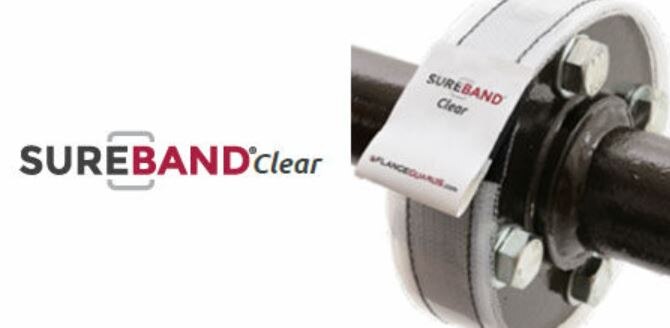 | Seals Flange Guards are protective safety devices designed to contain and deflect hazardous fluid leaks or spray-outs from pipe flange connections. View product → |
Frequently asked questions
Where do flange guards matter most in Mumbai industrial facilities?
Prioritise flange guards above walkways, beside pumps and rotating equipment, near electrical panels, at loading points, and wherever spray could reach hot surfaces or drains.
What information should you specify before choosing a flange guard?
Record the flange standard and size, joint configuration, fluid, operating pressure and temperature, likely leak type, and the direction a release could travel.
How do you match a flange guard to service conditions?
Select guard material and design for chemical compatibility, temperature, corrosion, sunlight, cleaning agents, pressure, and the required visibility or drainage.
How can you install a flange guard without hiding a leak?
Use a correctly sized guard with inspection access, visible or directed drainage, and a design that lets operators identify and manage a developing release.
Keywords