The critical buying detail is the tube outside diameter, not the nominal pipe size: a 6 mm fitting and a 1/4-inch fitting are different parts. You will be able to identify the correct configuration, thread, grade and matched components, then verify a quotation and installation plan before collecting or ordering near Masjid Bunder.
Key takeaways
- Match the fitting to tube OD, connection layout and thread standard.
- Check tube ends, ports and ferrule compatibility against the fitting drawing.
- Use the manufacturer’s installation instructions before testing or reassembling.
- Request material, size, thread, quantity and delivery details in your quotation.
Start with the tube OD, connection layout and thread standard
Specify the tube outside diameter (OD), connection layout, thread standard and service rating before requesting a fitting. Do not substitute nominal pipe size: a 6 mm tube fitting and a 1/4 inch tube fitting are different parts.
1. State the exact tube OD and material grade, such as 316 stainless steel, plus the quantity and required delivery date. Include wall thickness when pressure or compatibility calculations depend on it.
2. Name the configuration: tube-to-tube union, elbow, tee, reducer, bulkhead, tube adapter, check valve or another layout. “Stainless steel tube fitting” alone does not identify the flow path or end connections.
3. Identify every port separately. Write tube end, male or female port, port size, and thread standard, such as NPT, BSPP, BSPT or metric. A tube OD is not a thread dimension.
4. State whether the connection is a double-ferrule compression fitting, 37-degree flare, 24-degree cone, O-ring face seal or threaded design. For a hydraulic application, add the pressure class and sealing geometry.
5. Request the manufacturer’s exact part number, ferrule inclusion, seal material and pressure rating. This prevents a metric, inch, or thread-series substitution when you buy stainless steel swagelok fittings in mumbai or search for stainless steel tube fittings near masjid bunder.
Read the fitting drawing without confusing tube ends and ports
A fitting drawing labels the tube end and the port separately. Read the tube-end callout for outside diameter, such as 6 mm or 1/4 in; do not substitute nominal pipe size. Read the port callout for thread type and size, such as 1/4 NPT male, G1/4 female, or an SAE port.
A 6 mm tube end does not mean a 1/4-inch port.
Check these drawing features before approving the part:
- End symbols show whether the fitting is tube-to-tube, tube-to-male thread, tube-to-female thread, bulkhead, elbow, tee, reducer, or valve.
- Arrows and section views reveal the flow path. A straight union has one continuous bore; an elbow turns it; a tee adds a branch; a valve includes a controlled or blocked passage.
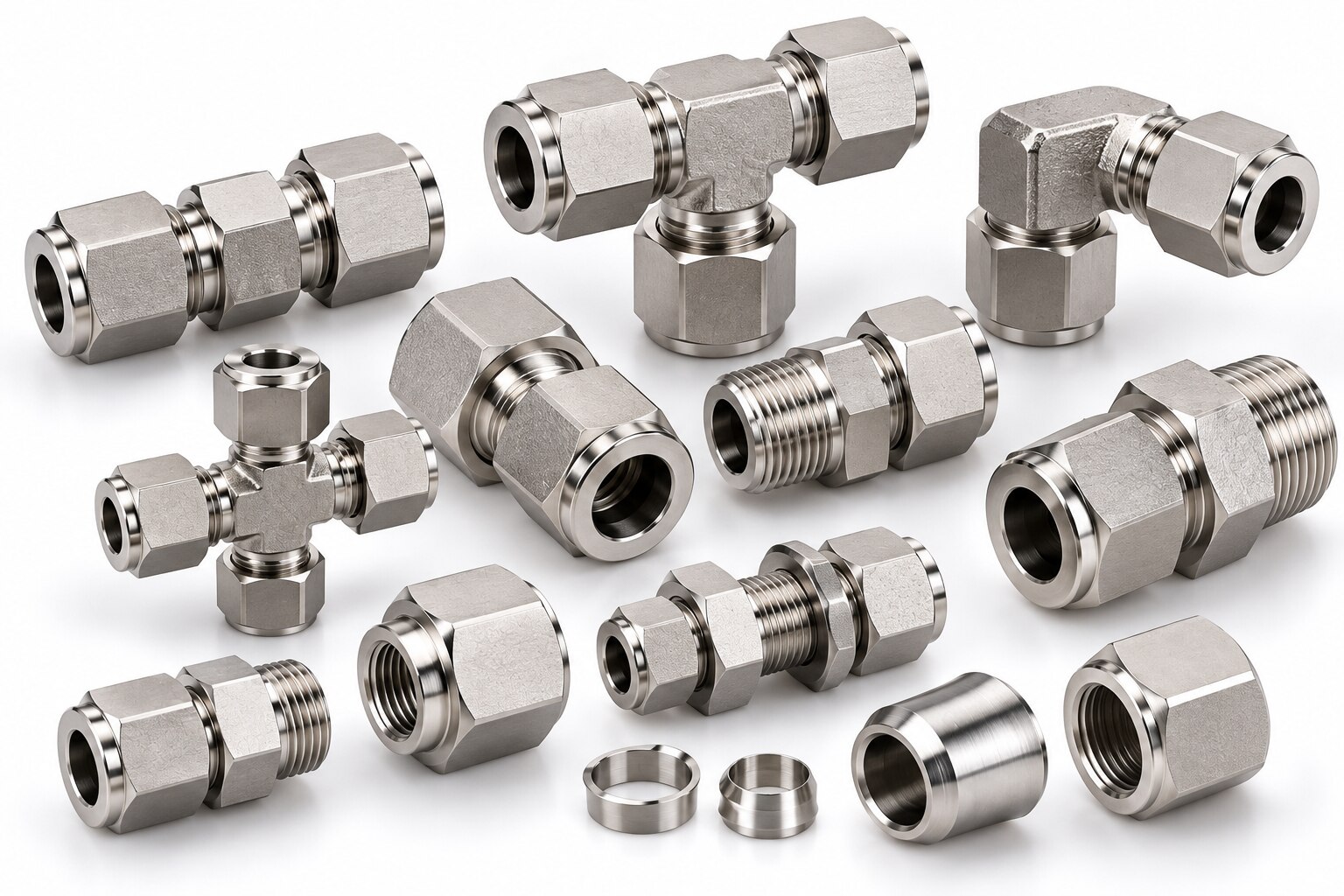
- The nose, nut and two separate ferrules identify a double-ferrule compression system. Confirm whether the front and back ferrules are supplied with the body.
- A dimension beside the tube socket identifies tube OD; a thread note beside the other end identifies the port.
Send the complete drawing or exact part number to a stainless steel Swagelok fittings supplier in Mumbai. Ask them to confirm tube OD, port thread, stainless grade, ferrule inclusion and flow configuration; a visually identical metric, inch or different-pressure-series part can be wrong.
Confirm the matched ferrule system and genuine manufacturer identity
Treat “compatible with Swagelok” as a warning, not proof. A matched assembly uses the manufacturer’s body, nut, front ferrule and back ferrule as one system; substituting a visually identical ferrule or nut changes make-up geometry and can compromise pressure retention.
Before accepting a quotation, ask the Swagelok fitting supplier in Mumbai to confirm these details in writing:
- Exact manufacturer part number, not only “stainless tube fitting”
- Manufacturer name on the package and component markings, with original packaging or traceability documents
- Tube outside diameter, including 6 mm versus 1/4 inch
- Thread designation and standard, such as NPT, BSPT, BSPP or metric
- Stainless grade, seal material where applicable, quantity and delivery date
- Configuration, such as tube-to-tube, tube-to-male thread, bulkhead or valve
- Confirmation that the supplied body, nut and ferrules are the manufacturer’s matched set
Reject a quotation that calls a generic fitting “Swagelok type” without an exact part number. Do not combine loose components from separate packs, even if the threads appear to fit. Keep the original tube, body, nut and ferrules together for any controlled reassembly.
Compare stainless fittings with other connection methods for your service
Choose a stainless steel compression fitting when you need a clean, demountable tube connection that resists corrosion and avoids welding. It suits instrumentation, chemical lines, sampling systems and moderate-to-high pressure service when the fitting’s pressure-temperature rating matches the tube and fluid.
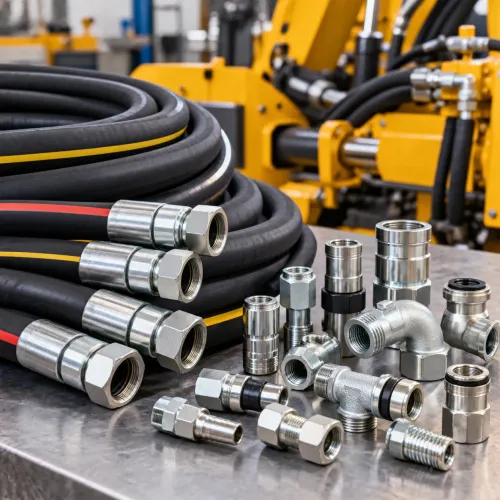
A search for stainless steel hydraulic fittings in mumbai is not enough: confirm whether the system requires compression, 37° flare, 24° cone, O-ring face seal or another hydraulic geometry.
| Option | What it means | When stainless compression is preferable |
|---|---|---|
| Carbon-steel Ermeto | 24° cone hydraulic connection, often economical for oil systems | Choose stainless when corrosion, washdown or process-fluid compatibility matters more than lower cost |
| Brass | Softer, economical metal for water, air and mild fluids | Choose stainless for higher strength, chloride exposure or demanding temperature |
| Welded | Permanent joint with no ferrule to retighten | Choose compression when equipment needs removal, adjustment or field replacement without hot work |
| Flared | 37° metal-to-metal seal used widely in mobile hydraulics | Choose compression for instrumentation tubing and repeated maintenance, not when the equipment specification mandates a flare |
| Cone | 24° cone-and-thread or cone-seat geometry | Choose compression only when its rated system matches the pressure and vibration duty |
| O-ring face seal | Elastomer seals the mating faces | Choose compression when elastomer compatibility or replacement is a concern |
| Threaded | Seals through tapered threads, a gasket or face seal | Choose compression where vibration, repeated disassembly and clean tube routing make thread leakage undesirable |
Do not apply PTFE tape to ferrule sealing surfaces. Use it only on an applicable tapered pipe thread.
Install, test and reassemble the fitting without creating a leak
A leak-free connection starts with clean, square tubing: cut with a sharp wheel cutter, remove burrs without reducing the outside diameter, and wipe chips, oil and grit from the tube and fitting.
Keep the nut and ferrules matched to their original body; stainless steel tube fittings near masjid bunder are not interchangeable with hydraulic ends merely because both use stainless steel.
- Push the tube fully against the internal shoulder while keeping it straight. Hand-tighten the nut, then make the specified wrench turns or reach the manufacturer’s gap setting. Do not tighten by feel; over-tightening can distort ferrules, while under-tightening can leave the tube unsecured.
- Support adjoining valves and tubing so vibration or side-load cannot twist the connection. For stainless steel hydraulic fittings in mumbai, follow the specified assembly method for its flare, cone or O-ring seal.
- Pressurise gradually with the correct test medium and stay below the rated pressure. Apply approved leak-detection fluid, hold pressure for the specified test period, and never use your fingers to find escaping fluid.
- Depressurise fully before correction. For reassembly, retain the original tube, body, nut and ferrules together; insert the tube until it bottoms, tighten to the documented previous position or gap, and replace scored, cracked or deformed parts. Do not rotate the tube while tightening.
Use a local quotation checklist before pickup or delivery
Send the supplier a complete line-item request, not “stainless steel tube fittings.” If you plan to buy stainless steel Swagelok fittings in Mumbai, state the tube outside diameter, exact part number if known, tube-to-tube or threaded configuration, thread standard and size, stainless grade, seal material, quantity, and required delivery date.
A 6 mm fitting is not a substitute for a 1/4-inch fitting.
1. Ask the stainless steel Swagelok fittings supplier in Mumbai to confirm available quantity against the manufacturer’s exact part number, not a similar-looking alternative. Get the promised pickup or delivery date in writing.
2. Confirm the connection layout: union, elbow, tee, reducer, bulkhead, tube adapter, check valve or another configuration. For hydraulic service, state the fitting standard, port thread, tube size and pressure class.
3. Request the material grade or heat information, conformity document, pressure rating and required test or calibration records. A GST invoice or packaging photograph does not prove system compatibility.
4. Ask whether nuts and both ferrules are included, and record the replacement lead time for missing or damaged pieces. Do not accept mixed bodies, nuts or ferrules without written compatibility confirmation.
5. Before payment, agree on inspection, shortage, wrong-size replacement and return terms, including the deadline, unopened-packaging condition, transport responsibility and any restocking charge.
M/S Gautam Bearing & Tools can be included in your comparison as a local swagelok fitting supplier in Mumbai, but apply the same written checklist to every quotation.
Related product
 | Hydraulic, Pnuematic Fittings & Automation Valves, Pumps, Tubes Stainless Steel Swagelock Fittings Stainless Steel Swagelok Fittings are precision-engineered tube fittings designed to provide secure, leak-tight connections in high-pressure and... View product → |
Frequently asked questions
What details should you provide when buying stainless steel Swagelok fittings?
Provide the tube outside diameter, connection layout, thread standard, pressure and temperature requirements, material, quantity and delivery location. Do not replace tube OD with nominal pipe size.
How do you read a stainless steel fitting drawing correctly?
Separate tube-end callouts from port callouts. Check each end’s tube OD, thread type, thread size and connection form instead of assuming all ends match.
How can you confirm ferrule compatibility and manufacturer identity?
Match the ferrule system to the fitting manufacturer’s instructions and inspect the packaging, markings, part number and traceability documents. Do not mix components from different systems without written approval.
What should a local quotation for stainless steel tube fittings include?
Ask for the exact part number, stainless-steel grade, tube OD, thread standard, connection layout, quantity, stock status, delivery or pickup terms and applicable taxes.
Keywords