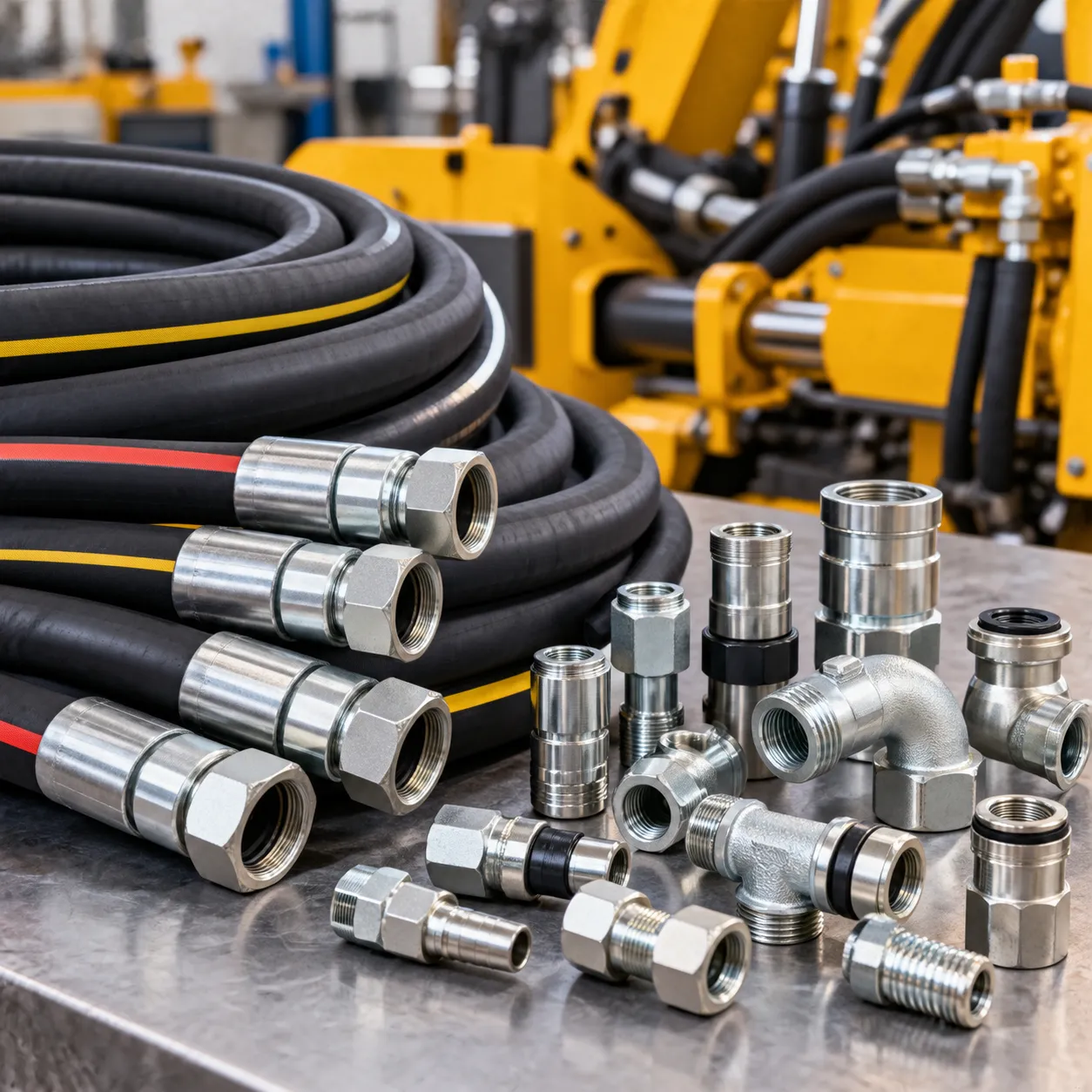
Hydraulic hoses carry pressurised fluid between components while accommodating movement, vibration, and equipment geometry. Because hose assemblies operate under pressure, procurement decisions should be based on technical compatibility rather than visual similarity.
A capable Hydraulic Hose and Fittings Supplier should work from application information covering pressure, temperature, fluid, dimensions, routing, and connection type.
Start With Working and Peak Pressure
The hose must be suitable for the system's working pressure.
Maintenance teams should also understand whether the equipment experiences pressure spikes. Selecting a hose without considering system pressure can increase the risk of premature failure.
Hose and fitting compatibility should be evaluated as an assembly rather than as unrelated components.
Confirm Fluid Compatibility
Hydraulic systems can use different fluids depending on equipment design and operating conditions.
The hose tube material, reinforcement, cover, seals, and fittings should be compatible with the fluid being conveyed.
Chemical incompatibility can cause swelling, softening, hardening, cracking, or deterioration.
Temperature Has Two Meanings
Buyers should consider both:
- Fluid temperature
- Ambient temperature
A hose operating near a heat source may face high external temperatures even when the hydraulic fluid itself remains within a moderate range.
Environmental exposure can therefore influence hose selection and routing.
Match the Correct Connection
Hydraulic systems use multiple thread forms, flange arrangements, and sealing methods.
Connections that look similar should never be assumed to be interchangeable.
Before ordering, identify:
- Thread type
- Thread size
- Male or female connection
- Straight or angled fitting
- Sealing method
- Port specification
Forcing mismatched threads can damage components and create leakage.
Respect Bend Radius and Routing
A hydraulic hose should not be bent more tightly than its specified minimum bend radius.
Poor routing can create stress near fittings, abrasion against nearby structures, twisting, or excessive movement.
Maintenance teams should inspect hose routing whenever failures repeatedly occur in the same location.
Know the Signs of Replacement
Potential warning signs include:
- Cracked outer cover
- Abrasion exposing reinforcement
- Leakage near fittings
- Blisters
- Kinks
- Flattening
- Corrosion around fittings
- Unusual stiffness
- Damaged connection threads
Pressurised hydraulic leaks can be hazardous, so damaged assemblies require controlled handling and appropriate maintenance procedures.
What to Provide When Requesting a Hose Assembly
Industrial buyers in Mumbai, Maharashtra can speed up procurement by documenting the existing assembly.
Useful information includes overall length, hose size, pressure rating, connection specifications, fitting orientation, fluid type, operating temperature, and equipment application.
M/S Gautam Bearing & Tools supplies hoses, fittings, seals, bearings, and other engineering products for industrial requirements. Detailed technical information enables the provider to understand the intended application rather than working from approximate visual comparisons.
A hydraulic hose assembly is a functional pressure-carrying component, not merely flexible tubing. Correct pressure rating, compatible materials, suitable fittings, proper routing, and accurate assembly specifications are central to reliable hydraulic operation.
Keywords