Some rotating machines generate forces in more than one direction. A shaft may experience radial loading while simultaneously being subjected to axial thrust. In these applications, standard bearing arrangements may not provide the required load control or positioning accuracy.
An Angular Contact Bearing Supplier in Mumbai may support applications where combined loading, higher speeds, and controlled axial positioning are important, but buyers first need to understand how angular contact bearings work.
What Makes an Angular Contact Bearing Different?
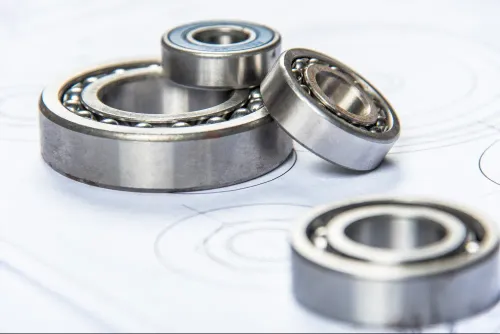
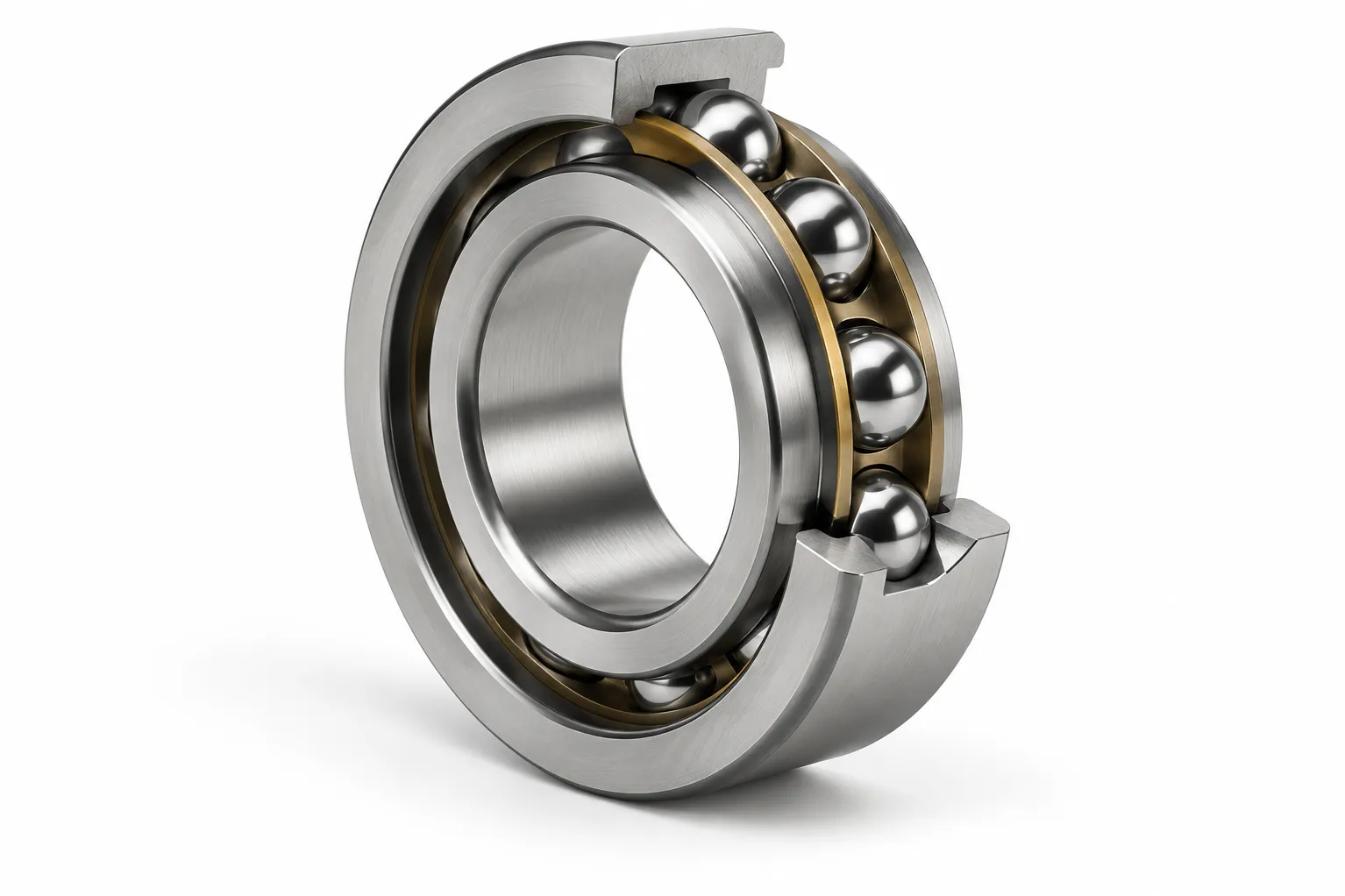
Angular contact ball bearings have raceways arranged so that forces are transmitted between the inner and outer rings at an angle relative to the bearing axis.
This contact angle enables the bearing to accommodate combined radial and axial loads.
In general, the contact angle influences characteristics such as axial load capacity and operating behaviour. The correct configuration depends on machine design, speed, rigidity, and loading direction.
Single Bearings Versus Paired Arrangements
A single-row angular contact bearing typically carries axial load predominantly in one direction. When axial loads occur in both directions, bearings may be installed in matched or appropriately arranged pairs.
Common arrangements include:
- Back-to-back
- Face-to-face
- Tandem
Each arrangement provides different characteristics for rigidity, moment loading, and axial load distribution.
Bearing pairing should follow the machine design and manufacturer's technical specifications rather than being improvised during maintenance.
Applications Where Selection Becomes Critical
Angular contact bearings may be encountered in equipment such as:
- Machine-tool spindles
- Pumps
- Compressors
- Gearboxes
- High-speed machinery
- Precision rotating assemblies
- Industrial motors
- Process equipment
In precision applications, bearing accuracy, preload, mounting, and lubrication can significantly affect performance.
Warning Signs of an Incorrect Arrangement
Bearing problems may appear as excessive temperature, abnormal noise, vibration, axial movement, poor rotational accuracy, or unexpectedly short service life.
However, these symptoms do not automatically mean the bearing itself is defective.
Possible causes include incorrect preload, poor alignment, unsuitable lubrication, incorrect mounting, shaft or housing tolerances, and unexpected operating loads.
Maintenance teams should evaluate the complete assembly before repeatedly replacing bearings.
Information to Confirm Before Purchasing
When sourcing angular contact bearings, buyers should verify:
- Full bearing designation
- Contact angle where applicable
- Precision class
- Internal design
- Cage configuration
- Sealing arrangement
- Pairing requirement
- Preload or clearance specification
- Speed requirement
- Lubrication method
These details are especially important when bearings are used in high-speed or precision machinery.
Local Industrial Procurement in Mumbai
Mumbai's engineering and manufacturing ecosystem includes machine builders, processing facilities, workshops, maintenance contractors, and OEM operations. These businesses often require rapid identification of replacement components without compromising specification accuracy.
M/S Gautam Bearing & Tools handles bearing and related industrial supply requirements for such applications. Providing the existing bearing designation and machine operating information can make technical discussions considerably more productive.
Angular contact bearing selection ultimately involves balancing axial load, radial load, speed, rigidity, precision, and installation requirements. Understanding those factors before purchasing helps engineering teams avoid mismatched replacements and maintain the intended performance of critical rotating equipment.
Keywords