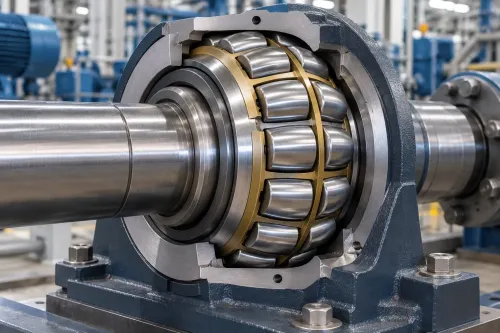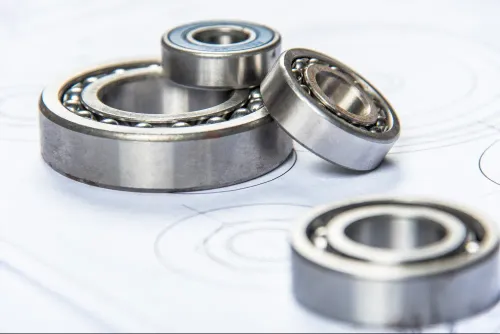
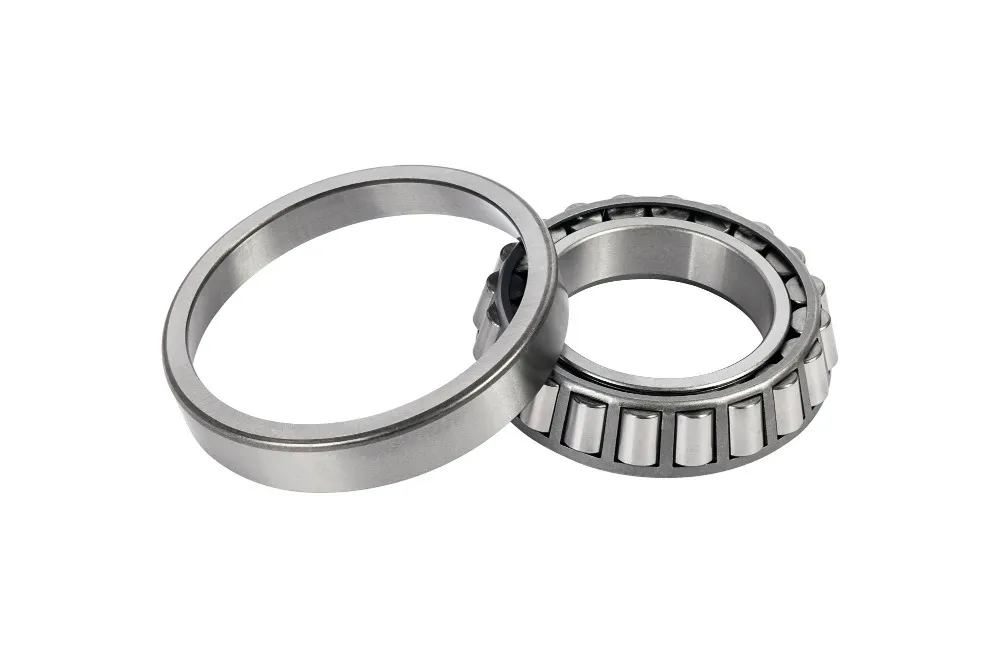
Machines handling substantial radial loads require bearings capable of maintaining stable rolling contact under demanding operating conditions. Cylindrical roller bearings are frequently considered for such applications because their roller geometry provides a relatively large contact area with the raceways.
Selecting a Cylindrical Roller Bearing Supplier should therefore involve understanding the machine's load, speed, shaft arrangement, and axial displacement requirements before confirming the bearing configuration.
Why Cylindrical Rollers Handle High Radial Loads
Unlike ball bearings, cylindrical roller bearings use cylindrical rolling elements. The line contact between rollers and raceways enables them to support comparatively high radial loads.
They are commonly used in:
- Industrial gearboxes
- Large electric motors
- Machine tools
- Compressors
- Pumps
- Material-processing machinery
- Heavy production equipment
- Power transmission systems
Their suitability depends on the specific bearing design and operating conditions.
Different Designs Perform Different Functions
Cylindrical roller bearings are available in several configurations. Ring flange arrangements determine whether the bearing can accommodate axial displacement or provide axial guidance.
Common configurations include NU, N, NJ, NUP, and related designs.
For example, some arrangements allow relative axial displacement between the shaft and housing. This can be useful in machines where thermal expansion causes the shaft to change length during operation.
Other designs provide greater axial location capability.
This is why replacing one cylindrical roller bearing configuration with another simply because the dimensions match can create operational problems.
Investigate Repeated Bearing Failure
When cylindrical roller bearings fail repeatedly, replacement alone may not solve the underlying issue.
Maintenance engineers should investigate possible causes such as:
- Incorrect bearing selection
- Shaft or housing dimensional problems
- Poor alignment
- Insufficient lubrication
- Excess lubricant
- Contaminated lubricant
- Excessive operating temperature
- Unexpected loading
- Improper mounting
- Electrical damage in motor applications
Examining failure patterns can provide valuable information about the machine itself.
Lubrication Has a Direct Role
Lubricant creates a protective film between rolling surfaces and helps manage friction and wear. The correct lubricant depends on speed, temperature, load, environment, and relubrication intervals.
Mixing incompatible greases or assuming that more grease always provides better protection can create problems. Excessive grease may increase churning and operating temperature.
Maintenance schedules should therefore specify both lubricant type and appropriate quantity.
What Procurement Teams Should Provide
For industrial buyers in Mumbai and across Maharashtra, sending complete information to the supplier can shorten the identification process.
Useful details include:
- Full bearing designation
- Manufacturer reference
- Shaft diameter
- Housing dimensions
- Existing bearing photographs where appropriate
- Machine type
- Operating speed
- Load conditions
- Temperature range
- Failure history when recurring problems exist
M/S Gautam Bearing & Tools supplies bearings and other industrial products for maintenance and engineering requirements. Clear application data enables a supplier to respond more meaningfully than a request based only on visual appearance.
Cylindrical roller bearings are often used precisely because the application is demanding. Treating their procurement as a technical selection process rather than a commodity purchase helps protect machinery, improve maintenance planning, and reduce the risk of repeated failures.
Keywords