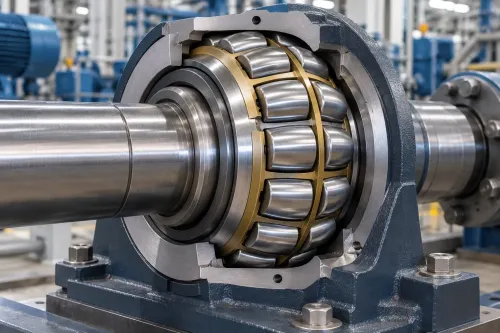
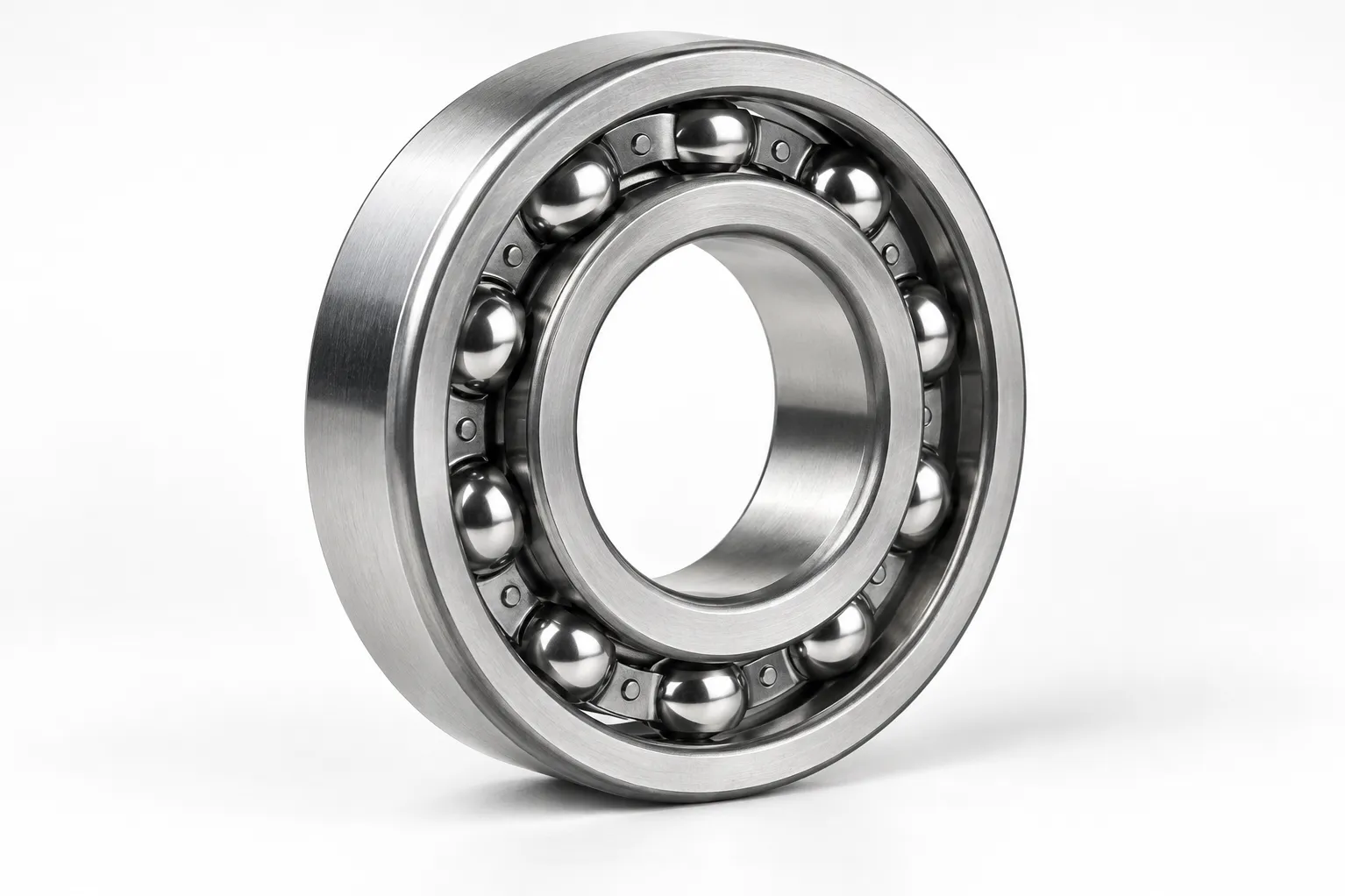
Deep groove ball bearings are among the most widely used rolling bearings in industrial equipment. Their relatively simple construction allows them to operate efficiently across numerous applications, but that versatility can sometimes lead buyers to treat all deep groove bearings as interchangeable.
When evaluating products from a Deep Groove Ball Bearing Manufacturer, industrial buyers should consider application requirements, dimensional specifications, sealing, clearance, speed, and lubrication rather than choosing solely by bearing size.
Where Deep Groove Ball Bearings Are Commonly Used
These bearings are designed primarily for radial loads while also accommodating axial loads in both directions within appropriate limits.
Typical applications include:
- Electric motors
- Industrial fans
- Pumps
- Gearboxes
- Conveyors
- Agricultural machinery
- Material-handling equipment
- Power tools
- Textile machinery
- General rotating equipment
Their ability to operate at relatively high speeds makes them suitable for many continuous-running applications.
Open, Shielded, or Sealed?
One important selection decision concerns the bearing closure.
Open bearings have exposed rolling elements and may be appropriate where lubrication is supplied externally and contamination is controlled.
Shielded bearings use metallic shields that help limit contamination while maintaining low friction.
Sealed bearings incorporate seals that provide greater protection against dirt and moisture, although the appropriate design depends on operating speed and environmental conditions.
A dusty manufacturing plant, for example, may require a different arrangement from a clean, enclosed electric motor application.
Internal Clearance Matters
Internal clearance refers to the movement available between the bearing rings and rolling elements before mounting.
Standard and increased-clearance variants are available for different operating conditions. Factors such as interference fits, shaft temperature, housing temperature, and rotational speed can influence the required clearance.
Choosing an inappropriate clearance may contribute to excessive heat, noise, vibration, or reduced bearing life.
Check Load and Speed Requirements Together
A bearing that meets dimensional requirements is not automatically suitable for the application's load and speed.
Engineering teams should evaluate:
- Dynamic load rating
- Static load rating
- Rotational speed
- Lubrication conditions
- Expected duty cycle
- Operating temperature
Continuous operation under demanding loads requires particularly careful selection.
Proper Installation Is Equally Important
Even a correctly specified bearing can fail prematurely when installed incorrectly.
Hammering directly on bearing rings, transferring mounting force through rolling elements, using contaminated tools, or applying excessive interference can damage raceways before the machine even begins operating.
Correct installation tools and procedures therefore form part of effective bearing management.
Why Specification-Based Procurement Helps
Manufacturing businesses in Mumbai, Maharashtra often operate mixed equipment fleets containing motors, pumps, production machinery, conveyors, and utility systems. Maintenance departments may consequently stock numerous bearing sizes and configurations.
Creating a structured bearing inventory containing bearing numbers, machine locations, specifications, and consumption history can make purchasing significantly more efficient.
M/S Gautam Bearing & Tools supports industrial requirements involving bearings and related maintenance products. For procurement teams, providing complete bearing markings or machine specifications can make identification more accurate than requesting a bearing by approximate dimensions.
Deep groove ball bearings may be common components, but their performance still depends on correct specification. Understanding load, speed, clearance, sealing, lubrication, and installation requirements helps industrial buyers make technically sound purchasing decisions and reduce unnecessary replacement cycles.
Keywords