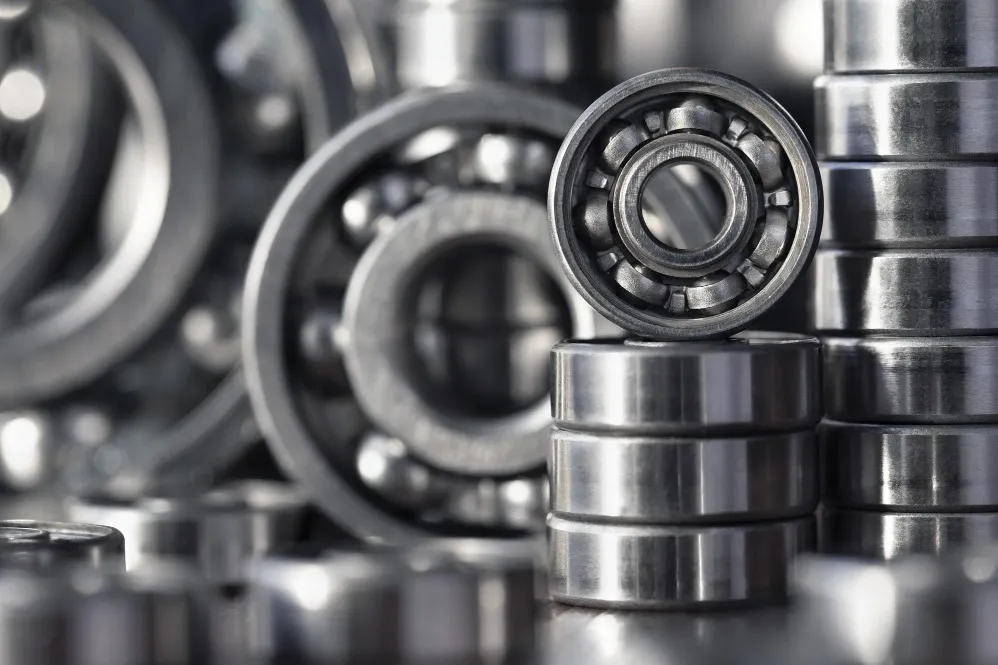
Industrial bearings influence machine accuracy, rotational stability, load handling, energy efficiency, and maintenance frequency. A bearing that is incorrectly selected may fit physically yet perform poorly under the actual operating conditions. For manufacturers and maintenance teams, choosing an Industrial Bearing Supplier in Mumbai therefore requires more than checking whether a particular bearing number is available.
Mumbai and the wider Maharashtra industrial market serve engineering companies, processing units, OEMs, repair workshops, infrastructure contractors, and manufacturing facilities with very different bearing requirements. Understanding the application before purchasing is the most reliable starting point.
Begin With the Operating Conditions
Bearings are designed for specific combinations of load, speed, temperature, alignment, lubrication, and environmental exposure. Procurement teams should provide accurate application information rather than relying only on dimensions.
Important details include:
- Radial and axial load requirements
- Normal and maximum operating speed
- Shaft and housing dimensions
- Working temperature
- Exposure to dust, water, chemicals, or contaminants
- Lubrication method
- Expected operating hours
- Alignment conditions
- Required sealing arrangement
Two bearings with similar dimensions may have different internal clearances, cage designs, sealing configurations, or load capacities.
Understand the Main Bearing Categories
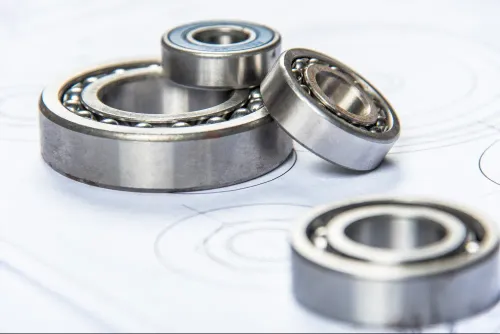
Deep groove ball bearings are widely used because they accommodate radial loads and moderate axial loads while supporting high-speed operation. They are commonly found in motors, pumps, fans, conveyors, and general industrial machinery.
Cylindrical roller bearings offer high radial load capacity and are useful where heavier radial loads are present.
Angular contact bearings are selected when combined radial and axial loading must be managed, particularly in applications requiring controlled shaft positioning.
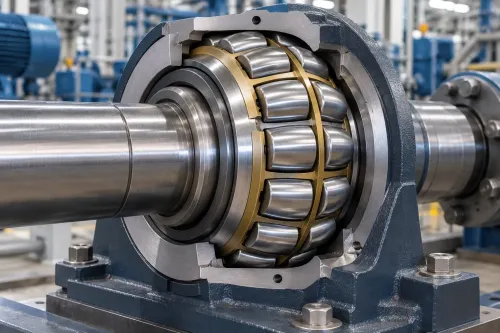
Spherical roller bearings can accommodate heavy loads and some misalignment, making them suitable for demanding industrial equipment.
Thrust bearings, meanwhile, are designed primarily for axial loads.
The correct category depends on the machine rather than simply on what is commonly stocked.
Verify Specifications Before Ordering
Bearing identification should go beyond bore diameter, outside diameter, and width.
Suffixes and technical markings may indicate:
- Internal clearance
- Seal or shield type
- Cage material
- Precision class
- Lubrication
- Heat treatment
- Special design features
Replacing a bearing with a dimensionally similar but technically different product can shorten service life or affect machine performance.
Consider the Cost of Downtime
Industrial procurement decisions are often influenced by unit price, but bearing cost represents only a small part of the overall operational impact.
An unsuitable bearing may contribute to vibration, excessive heat, premature wear, unplanned shutdowns, shaft damage, or repeated maintenance. For a production facility, these consequences can cost substantially more than the component itself.
This is why experienced buyers consider lifecycle suitability, not just initial purchase price.
Local Availability Can Support Maintenance Planning
For businesses operating in Mumbai and industrial areas across Maharashtra, sourcing through a technically capable local supplier can simplify replacement planning and recurring procurement.
Local support becomes particularly useful when maintenance teams need specification verification, equivalent product identification, or coordinated sourcing of related industrial components.
M/S Gautam Bearing & Tools works with industrial buyers requiring bearings and associated engineering products for varied machinery applications. The important purchasing principle remains consistent: identify the machine requirement first and select the bearing accordingly.
A dependable bearing procurement process combines accurate technical information, suitable product selection, specification verification, and realistic consideration of operating conditions. That approach helps manufacturers reduce avoidable component failures while making maintenance purchasing more predictable.
Keywords